
Here is a new blog post from a guest author contributing to Lang’s Home Remodeling’s website. All views expressed are those of the author.
A timber-frame home provides more opportunities than most homeowners could dream of. The additional support of the solid wood posts and beams means fewer load-bearing walls, if any. That advantage opens up the rooms to an excellent variety, from the style of the ceiling and windows to furniture placement.
With this guide, homeowners can get ideas for how to leverage the strength and style of the exposed framing to divide the open living space seamlessly and beautifully.
Posts and Beams as Zoning
With a traditionally framed home, the walls do the work of dividing up the major living spaces into individual rooms. With a timber-frame home, the posts and beams do the literal heavy lifting in this respect. Because timber frames can support a great amount of weight, they virtually eliminate the need for load-bearing walls in the home interior.
Homeowners can get creative with the use of exposed posts and beams to set the stage for each living area.
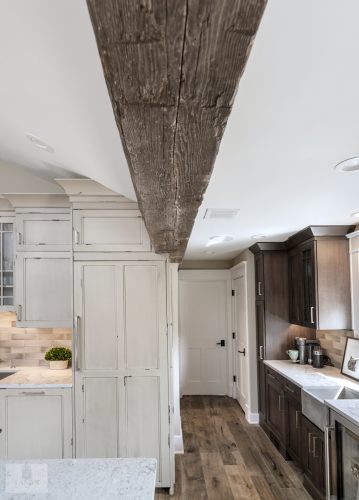
Smooth Transitions
In timber frame home floor plans, transitions can be as smooth as the homeowner prefers. Some people like to have the great room divided into clear zones delineated by partial walls, screens, and differing décor choices. With timber frames, homeowners can make these large, airy spaces appear cohesive without feeling like they are too big to manage.
Exposed posts can easily create zones that blend smoothly from dining to living room or from living room to studio, so that every square foot of the room is useful.
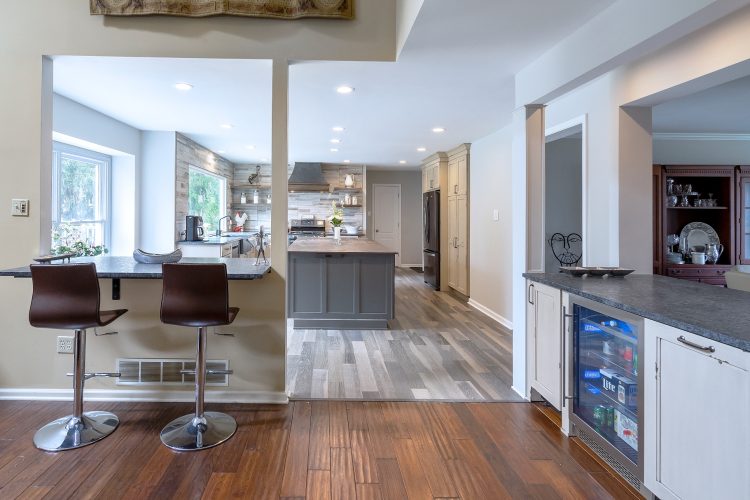
Bold Outlines
Although some homeowners may want to use timber framing for its unobtrusiveness in the living space, others want it to stand loud and proud. Timber posts and beams, with their larger size and warm tones, can stand out from the rest of the room. The color scheme affects the overall appearance.
Exposed beams against white walls can provide the perfect transition from dining to kitchen, shifting seamlessly from natural wood to white cabinets and subway tile.
Dramatic Heights
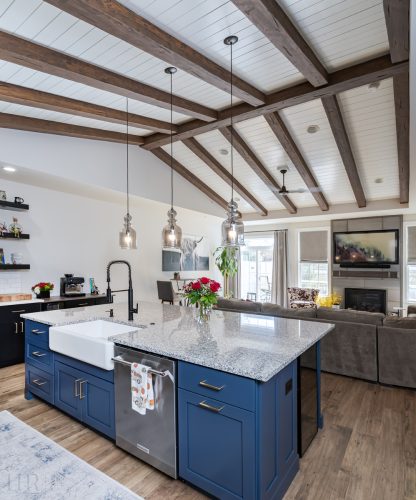
Eliminating reliance on load-bearing walls lets homeowners take their desired aesthetic to even greater heights. For example, leaving beams and trusses exposed, but painting the rest of a vaulted ceiling in a light color, can make the room feel much larger and draw the eye to the beams running to the high point.
The timber framing makes it easy to choose a bold, cathedral ceiling that makes even a small living area feel spacious.
Staircase Dividers
When homeowners do not need a wall to divide the rooms from each other, it creates opportunities for wondrous creativity in design. In many homes, a grand staircase provides a view from the entryway but is quickly obscured by interior walls.
Timber framing allows homeowners to use the staircase as a bold focal point for the room, as well as an effective division. Stairs curling around a large post go along with the rustic aesthetic of the timber framing and emphasize the height of the structure.
Second-Story Overlooks
Creating a second-story overlook can be much easier and more graceful with timber framing. The posts and beams can support the weight for the second story, without forcing the design to accommodate walls on the main floor. The balustrade allows homeowners to unify the look with the exposed timber or think outside the box with bold styles and colors.
The design makes the space look even taller without losing all the height to the ceiling.
Expansive Windows
Although timber framing often makes homeowners think about how they can move easily inside, the opportunities to look out become even more exciting. The support from the frame opens up the exterior walls, so they can accommodate larger and higher windows. Designers can provide large, picture windows that provide an unimpeded view of the landscape.
They can also use up every spare foot of wall for patterns of windows and skylights that increase the overall natural lighting and sense of airiness.
Plentiful Lighting
With less structure needed to support the home, homeowners have more choices in lighting. Unsurprisingly, timber framing increases the range of options. Lighting is best done in layers, with different styles and color temperatures.
The right balance of lighting can ensure sufficient illumination for the living zone, while creating points of interest around the framing. Exposed ceilings have more room to accommodate large, bold light fixtures like a hanging chandelier. Upward-facing lights installed on exposed posts and beams create warm lighting for a comfortable evening.
Downward-facing spots or track lights install easily along beams to provide bright lighting for the kitchen and dining areas.
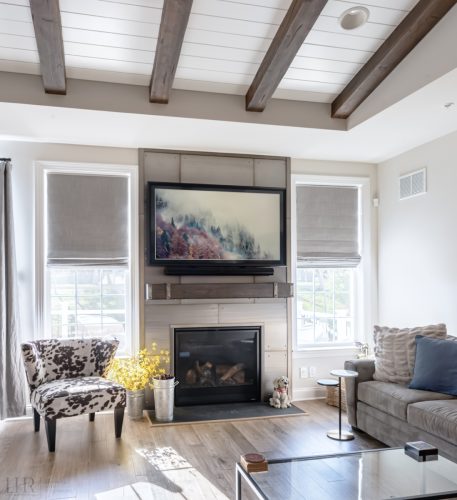
Furniture Placement
For homeowners who want to have clear delineations between one living zone and the next, furniture placement becomes a great opportunity to use style and design to demark the space. Timber framing opens up the room even more, so that designers can make bigger and bolder choices for seating and storage.
A sectional can create a corner for the family and friends to sit and watch a movie or have a lively discussion. A bar-height table and stools become the perfect spot for everyone to have a light snack or a drink as they enjoy the view and natural light through large, floor-to-ceiling windows.
Unified Décor
Timber framing allows for so much flexibility that homeowners may need to remember to keep the décor of the space cohesive. The lack of load-bearing walls allows people to get really creative, but they may not want to end up with an aesthetic that lacks coordination.
Although the décor of each zone can be unique with its own furniture and color palette, design elements like leather or warm wood help to unify the décor. Homeowners should choose one or two stylistic themes to use throughout the living areas, so that everything else feels like it belongs.
With timber framing, the sky is the limit for many home designs. These options can help homeowners determine if they want to go bright and bold with the exposed posts as focal points for a great room or let the wood blend into the background of a cozy, rustic space.
AUTHOR BIO: Matt Franklin is the Lead Architect at Riverbend Timber Framing, which produces beautiful, energy-efficient timber frame homes across North America. With 30 years of experience designing the finest custom timber homes, Matt brings deep expertise and a passion for creating homes that reflect both the land and the lifestyle of each client.
His thoughtful approach has helped his homes win nearly 100 national design awards.