
Here is a new blog post from a guest author contributing to Lang’s Home Remodeling’s website. All views expressed are those of the author.
The bathroom has long occupied an oddly narrow place in residential design. It served its mechanical purpose and rarely invited deeper consideration, which meant its potential influence on the character of the home remained largely unrealized. Yet the room’s inherent qualities tell a different story.
As design priorities began to take in sensory comfort and psychological comfort, the home bathroom finally took its place as a design opportunity that had been overlooked for far too long.
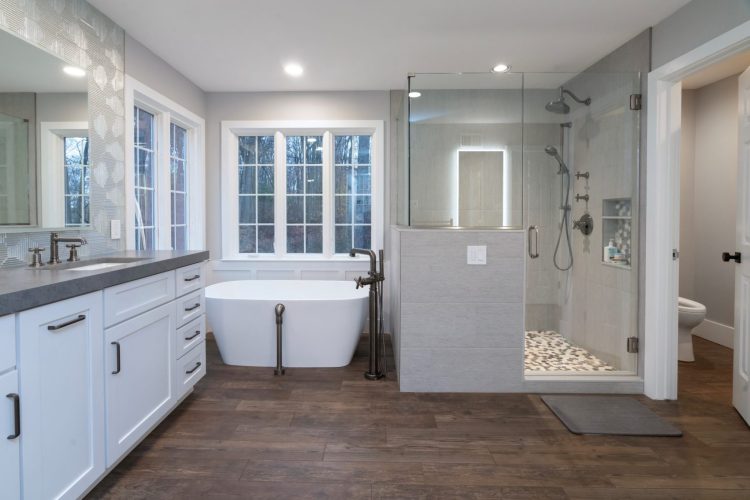
How Bathrooms Gained New Relevance in Residential Design
Earlier generations of bathrooms were informed almost exclusively by plumbing infrastructure. Walls were positioned to contain pipes. Fixtures followed practical alignments. Surfaces were selected for durability above all else. This logic produced functional rooms, but it also stifled imaginative design. The spatial intent rarely went beyond completing the essential functions as efficiently as possible.
As the possibilities of spa-like rooms started to take form, the bathroom was the most likely contender for the space. Soon, interior space designers and architects were both envisioning much more for the humble bathroom.
The Practical Emergence of Spa-Inspired Elements
The introduction of spa features into the residential bathroom was not merely stylistic. It reflected a growing recognition that the room could function as a small restorative environment within the home’s overall plan.
A soaking tub provides a slower pace than the standard fixture, and it establishes a new relationship between the user and the volume of the room. Steam systems create controlled atmospheric variation, something quite rare in domestic interiors.
Even rainfall showerheads, used intentionally rather than for novelty, influence the way people inhabit the vertical space around them.
These elements succeeded because they aligned with existing architectural constraints. Many could be integrated without extensive renovation. A bathroom remodel didn’t require reconfiguring the entire plan. It simply needed to acknowledge the room’s capacity to host a more deliberate experience.
The shift demonstrated that wellness in design does not require monumental gestures. It requires calibrated adjustments that respect the room’s original logic.
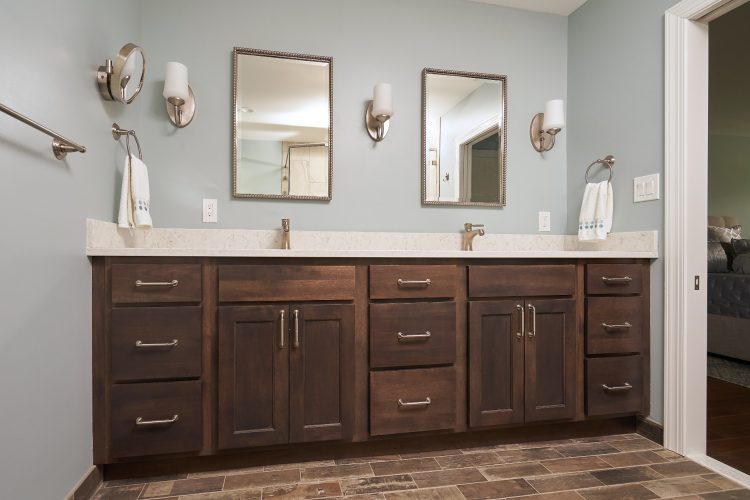
Material Selections That Alter Spatial Perception
One of the most influential changes in bathroom design has been the adoption of natural materials. Stone, wood, and textured ceramics offer qualities that synthetic surfaces often fail to provide. They moderate light differently. They absorb sound. They introduce irregularities that make the room feel grounded rather than sterile.
Each of these characteristics affects how the space is perceived, even when the footprint remains identical.
Stone suggests permanence, and in a small room, that quality becomes surprisingly reassuring. Wood introduces warmth that offsets the hardness typical of wet spaces. Tile with tonal variation creates a quieter visual field than glossy surfaces that reflect every angle of light. These choices do not overwhelm the architecture.
Instead, they expand the sensory range of a room that has historically been flat and overly polished. The bathroom begins to carry a more measured presence within the home.
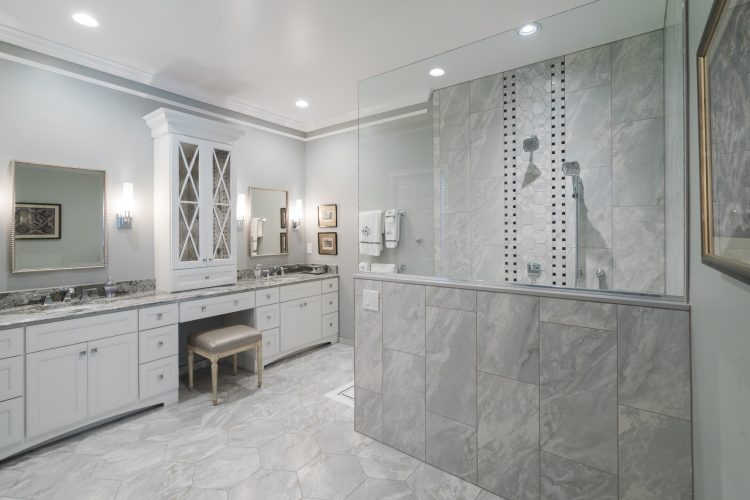
Technology That Supports Rather Than Dominates
Residential technology often risks overshadowing the spaces it aims to improve. In the bathroom, however, the most successful integrations have been those that remain nearly invisible. Smart lighting systems adjust gradually to support circadian patterns rather than forcing a single brightness level.
Water temperature controls maintain consistency and reduce the interruptions caused by manual adjustment. Heated floors contribute comfort without altering the room’s visual order.
This restrained approach acknowledges the bathroom’s scale. The room cannot absorb technology that behaves theatrically. It benefits instead from systems that operate quietly and predictably. When technology removes points of irritation rather than adding complications, it reinforces the sense of control that wellness-oriented bathrooms aim to provide.
Personalization as a Functional Rather Than Decorative Requirement
Although the bathroom’s evolution has been heavily influenced by material and spatial decisions, personalization determines whether the outcome succeeds. Wellness cannot be achieved through universal templates. It depends on aligning the room with the user’s routines and tolerances. Some require minimal visual information to feel at ease.
Others prefer subtly layered textures. Storage expectations vary widely, as do lighting preferences.
The architectural task is to understand these distinctions and convert them into spatial solutions. Placement of shelving, alignment of mirrors, proportion of clear surfaces, and the calibration of lighting levels all affect how the room operates. These decisions guide behavior during the routines that bookend each day.
When personalization is treated as an architectural requirement rather than a decorative one, the bathroom becomes a genuinely supportive environment.
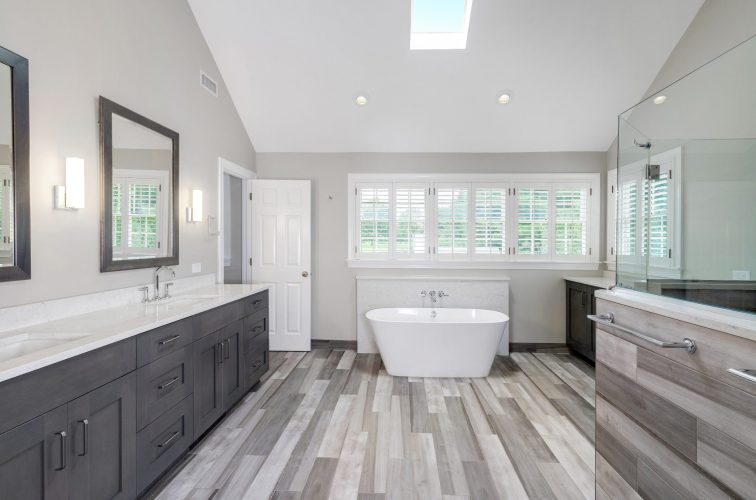
The Influence of Thoughtful Bathroom Design on Daily Rhythms
The impact of a well-designed bathroom often appears incrementally rather than all at once. A clearer layout reduces hesitation. Balanced lighting improves precision. Materials with a consistent visual character reduce cognitive load. Over time, these qualities structure a reliable sequence of actions that makes the start and end of each day more composed.
The bathroom becomes a stabilizing element within the home, often more so than larger rooms with more complex demands placed upon them.
Travel frequently makes the effect more noticeable. Encountering a poorly organized or visually chaotic bathroom elsewhere highlights how much design contributes to comfort. A well-planned room fades into the background, which is precisely what allows it to function effectively.
Long-Term Value of Serenity-Oriented Bathroom Design
Bathrooms have always played a role in home valuation, but the contemporary emphasis on wellness has increased their significance. Buyers respond to rooms that combine clarity, durability, and a calm visual structure. These spaces convey long-term usability rather than trend-driven novelty. Quality materials, well-proportioned lighting, sufficient storage, and restrained technology all signal thoughtful design.
For homeowners who remain in place, the benefits manifest daily. A bathroom oriented toward serenity becomes part of the home’s underlying framework of comfort. It influences routine, shapes perception of the household environment, and supports a sense of order that extends outward into other rooms.
The modern bathroom reveals how a once-overlooked space can influence the broader experience of a home. When considered with architectural intention, it becomes not merely functional but restorative, offering a degree of steadiness that many homes lacked without recognizing the absence.
Author bio: Davis Glassberg is the Product Manager at Bath Concepts, which transforms bathrooms into spa-like, dream retreats. Glassberg is in charge of training and developing innovative new products for the bath industry. Glassberg has been actively involved in acrylic bathroom remodeling for over three decades.
During that period, he has designed over 40,000 bathrooms and trained more than 10,000 design consultants across the U.S.