Here is a new blog post from a guest author contributing to Lang’s Home Remodeling’s website.
All views expressed are those of the author.
Most kitchens hold a few pieces of equipment that earn their space for only a few weeks each year. In November, a turkey roaster takes over a lower cabinet, and the stand mixer works overtime through the holiday baking season. By August, a water-bath canner may be the most important pot in the house.
For the rest of the year, those same items crowd cabinets and push everyday tools out of easy reach. Flexible kitchen storage for seasonal cooking equipment solves this problem by giving each item a predictable home that changes with the calendar.
The tools you need this month stay close, and everything else waits in a spot you can reach when its season returns.
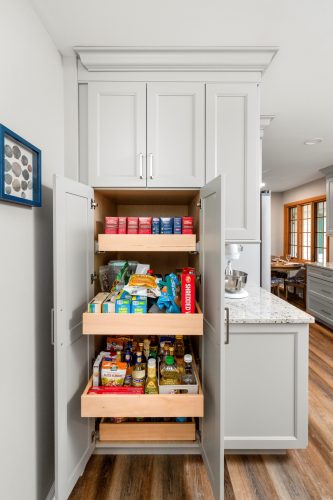
Why Does Seasonal Equipment Overwhelm Kitchen Storage?
Seasonal equipment overwhelms kitchen storage because most homeowners plan their cabinets around daily cooking rather than occasional projects. Bulky items like roasting pans, ice cream makers, and pressure canners rarely fit in standard 12-inch-deep upper cabinets.
As a result, they end up stacked in base cabinets, balanced on the refrigerator, or left on the counter. In each of those spots, they block tools you use every day.
Counters usually absorb the overflow first, which is why seasonal clutter and everyday clutter tend to build on each other. Many storage tips to tackle countertop clutter, such as using vertical space and giving rarely used appliances a designated cabinet, work just as well for seasonal gear. The main difference is that the right answer for seasonal equipment changes several times a year.
How Should You Sort Equipment by Season and Use?
Start by grouping every specialty item according to when you use it and how often it comes out during that season. This sorting step turns a vague sense of clutter into a clear list of what needs prime space and what can live farther away. Typical seasonal groups in a busy kitchen include:
- Fall and holiday equipment, such as roasters, cookie sheets, pie dishes, and stand mixer attachments
- Winter comfort cooking tools, such as slow cookers, Dutch ovens, and fondue sets
- Spring entertaining pieces, such as large platters, punch bowls, and tiered stands
- Summer and preserving gear, such as canners, jar racks, ice cream makers, and grill tools
Once the groups are clear, count how many weeks each one stays in active use. A slow cooker that runs every Sunday from November through March deserves an accessible spot for the whole winter. A canner used for only two weekends in August, on the other hand, can live on a high shelf or in the basement.
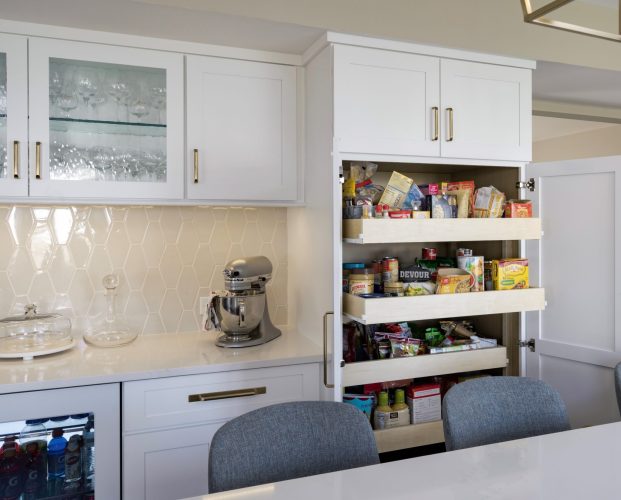
Where Should Off-Season Equipment Go?
Off-season equipment belongs in the least valuable storage space that still keeps it clean, dry, and easy to retrieve. High cabinets above the refrigerator, deep pantry shelves, and dry basement shelving all work well for items you will not touch for several months.
Garages are less reliable because summer heat and winter cold can warp plastic parts and damage electrical components in appliances like stand mixers or bread machines.
Preparation before storage also determines whether equipment works when its season returns. Wash and fully dry every piece, coil cords loosely, and keep small parts like beaters and blades in a labeled bag taped to the main unit. Careful cleaning and packing is a large part of storing your appliances for long stretches, since trapped moisture and food residue cause much of the off-season damage.
What Makes Flexible Kitchen Storage for Seasonal Cooking Equipment Work?
Flexible storage works when shelves, drawers, and cabinets can change shape as your equipment changes throughout the year. Adjustable shelving is shelving mounted on pins or tracks, so you can raise or lower each shelf without tools. A single cabinet with adjustable shelves can hold tall stockpots in winter and stacked platters in spring.
Pull-out shelves in base cabinets add to that flexibility, because they bring heavy items like Dutch ovens forward instead of forcing you to kneel and reach.
Several other features make rotation easier without a full remodel. An appliance garage is a countertop cabinet with a door that hides small appliances while keeping them plugged in and ready. One garage can hold the stand mixer during baking season and the blender during summer. A rolling cart works in a similar way, moving from the pantry to the kitchen whenever a canning or baking project begins.

How Can Older Kitchens Make Room for Rotating Equipment?
Older kitchens can make room for seasonal equipment by using the odd spaces that newer layouts often lack. In older homes around Bucks County, deep corner cabinets, built-in hutches, and butler’s pantries often hold far more than they appear to. Adding pull-out trays or Lazy Susans makes that hidden depth usable for heavy seasonal pieces.
The challenge in a period home is adding storage without erasing the details that give the kitchen its personality. Most approaches to maximizing storage in period homes favor freestanding furniture, glass-front cabinets, and custom inserts over tearing out original millwork. A vintage pie safe or Hoosier-style cabinet, for example, can hold holiday baking tools all year while fitting the style of the room.
When Should You Plan Seasonal Storage into a Remodel?
The best time to plan seasonal storage is during the design phase of a kitchen remodel, before you finalize cabinet sizes and layouts. At that stage, you can request a tall pantry cabinet with adjustable shelves or a deep drawer sized for a stand mixer. An outlet inside a base cabinet can also power an appliance lift, which raises a heavy mixer to counter height.
A remodel also creates a temporary storage problem, since seasonal and everyday equipment both need somewhere to go while cabinets come out. A clear plan for keeping your kitchen organized during a renovation tells you which items to pack first and which to keep in a temporary kitchen. Off-season equipment is usually the easiest group to box up first, because you will not need it until the work is finished.
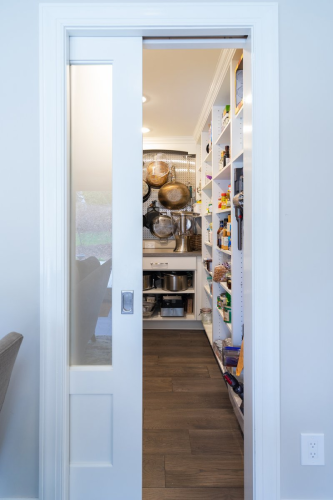
How Do You Keep the Rotation Going Each Year?
The rotation stays manageable when you tie it to a few fixed dates rather than waiting until a cabinet overflows. Swapping equipment around Labor Day, before Thanksgiving, in early spring, and before Memorial Day lines up with natural shifts in what most people cook.
Labels and a simple inventory keep the system working from one year to the next. Mark each bin with its contents and its season and tape a short list inside a pantry door. That list tells you at a glance whether the canning jars are in the basement or the hall closet. During each swap, set aside anything that went unused for a full season and decide whether it still deserves storage space.
Let Your Kitchen Change with the Seasons
Flexible kitchen storage for seasonal cooking equipment works best when you sort items by season and store off-season pieces with care. It also depends on shelves and cabinets that can adapt as your cooking changes.
Even small steps, such as adding adjustable shelves or setting four swap dates, keep everyday tools within reach and specialty gear in good condition. Before your next seasonal shift, gather every specialty item you own and sort it into groups. Then give each group a home that matches how often you really use it.